
Today, electronic health record (EHR) software is predominantly used by clinical staff, such as doctors, nurses, and other medical professionals. Simultaneously, practice management software (PMS) is designed for utilization by practice administrators and support personnel, which often includes receptionists, billing experts, and office coordinators.
The Black Book Market Research shows that 98% of U.S. physicians implement EHR software, whereas 87% of healthcare administrators employ PMS software tools. This trend confirms that an EHR system is vital for modern patient care. Yet, with the evolution of healthcare tech, EHR vendors have recognized the benefits of incorporating PMS solutions into their offerings. This integration enhances the efficiency of administrative tasks and ensures seamless management of clinical operations within healthcare organizations and clinics.

Although medical practice setups can operate effectively without an integrated PMS system, essential reasons exist for combining EHR and practice management software functionalities. Below, we will explore the nature of both solutions by analyzing their critical differences and determining whether combining them will be effective for your medical practice.
Are you ready to unify your clinical and administrative operations? Contact SPsoft to consult with our healthcare software specialists and build a unified, HIPAA-compliant platform tailored to your needs!
Table of Contents
“At SPsoft, our commitment to advancing healthcare through technology has driven us to develop top-tier EHR and practice management solutions. With years of experience, we’ve mastered the integration of clinical precision and administrative efficiency, helping healthcare providers offer exceptional patient care while optimizing operational workflows. Our solutions are designed with the user in mind, ensuring that our clients receive user-friendly, powerful, and transformative software that puts the practice at your fingertips.“
Mike Lazor
CEO, SPsoft
“Our team at SPsoft is dedicated to enhancing how healthcare facilities operate. We recognize the unique challenges medical professionals face, which is why our EHR and practice management solution is crafted to streamline processes and improve patient outcomes. By combining robust functionality with intuitive EHR design, we ensure our solutions meet the needs of today’s dynamic healthcare environment and improve clinical workflows.“
Romaniya Mykyta
Head of Product Management, SPsoft
The Core Functions of EHR and PMS
To find the best EHR software for your organization, it is essential to first understand the core functions of each system.
Key Reasons to Use an EHR System
An electronic health record is the digital counterpart of a patient’s medical chart, covering their comprehensive health history and medical information. This tech is among the most prevalent medical practice management software choices today. An EHR platform offers numerous features to support patient care, including:
- Clinical Documentation. Document management capabilities, enabling the creation and digital storage of patients’ clinical records and charts. The EHR platform ensures the accuracy of clinical documentation.
- Medication Tracking. Allows for monitoring patient prescriptions with ease, helping assess potential medication interactions and record allergic reactions.
- E-Prescribing. Allows practices to issue electronic prescriptions that patients can send directly to a pharmacy.
- Customizable Templates. Customizable consultation templates that simplify the charting process and ensure patient information is easily accessible.
- Reporting Tools. Automate the generation of reports from the EHR software using collected data, such as patient histories, lab results, or other documents.
These are the most compelling reasons for the widespread use of EHR management solutions in primary care and specialized settings.
Key Reasons to Use Practice Management Software (PMS)
A practice management solution is a digital platform developed to manage all the administrative tasks essential for a medical practice’s smooth operation. This includes automatically tracking medical supplies and handling the revenue cycle management (RCM).
Key features of medical practice management systems facilitating healthcare operations cover:
- Patient Portal. Enables patients to schedule appointments online, access lab results, and communicate with their doctors, significantly enhancing patient engagement.
- Billing and RCM. Automated medical billing systems generate invoices, track claims, and manage the full revenue cycle management (RCM). This feature, often handled by robust billing software, is central to a modern medical facility.
- Scheduling Capabilities. Billing tools and scheduling features that allow for easy adjustments and viewing of staff and patient schedules in a centralized location. Effective scheduling is key to practice automation.
- Inventory Management. Tools that maintain an accurate count of items and notify when restocking is needed.
- Patient Management (CRM). Medical CRM systems track each patient visit interaction, enhancing patient experiences and supporting effective digital marketing strategies.
Practice management software offers relief from laborious manual tasks, helping streamline healthcare operations. This is beneficial for a small practice or independent practice aiming to cut administrative costs and expanding organizations looking to grow and handle more patients.
EHR vs. PMS: The Critical Differences
Recognizing the following fact grasps the distinction between EHR and practice management. While practice management focuses on the healthcare facility’s daily administrative activities, EHRs center primarily on patient-specific data, with limited overlap.
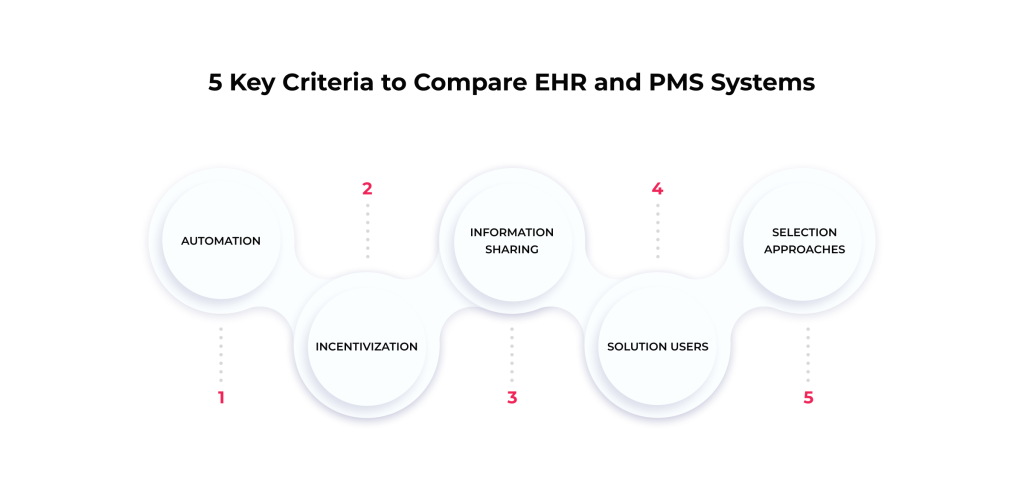
Difference №1. The Focus of Automation
Practice management platforms and EHR systems heavily utilize automation to streamline various tasks. PMS tools automate routine tasks like scheduling work and setting appointments. Also, they enable the storage and reuse of patient data like names, demographics, insurance details, and contact information. EHRs, on the other hand, allow healthcare providers to detect health patterns, identify allergies, and predict potential diseases, supporting clinical workflows.
Such a capability to collect patient data once and then utilize it repeatedly eliminates the need for repetitive information entry with each visit. That frees administrative staff to focus on more critical tasks and reduces the reliance on manual, handwritten documentation.
Difference №2. Financial Incentivization
In contrast to PMS platforms, the government incentivizes the adoption of an electronic medical record system to improve patient care. Healthcare providers can receive substantial financial investments for implementing an EHR system in their single practice.
These incentives, which can substantially enhance a facility’s financial performance due to EHR project management adoption, are a promising benefit. Besides, the system’s use varies among different roles within a healthcare setting. For instance, a doctor may require complex access to a patient’s medical history and health insurance information. However, a typical front desk staff member does not. That highlights possible financial gains and the system’s adaptability, instilling a sense of optimism about the investment in an EHR project management software solution.
Difference №3. Information Sharing and Health Information Management
While the data managed by PMS software is traditionally tailored to a clinic and does not need widespread sharing, EHR solutions enable broader data sharing. That facilitates better decision-making and more comprehensive treatment discussions. EHRs allow physicians, staff, patients, and other organizations to exchange crucial documents containing health information.
Difference №4. Solution Users
Office managers and receptionists primarily utilize a practice management system, focusing on the billing and scheduling aspect of the clinical and financial workflow. In contrast, medical professionals like doctors, dentists, and nurses are the primary users of EHR software. Thus, integrated practice management and EHR tools are vital to managing schedules efficiently, accommodating more patients, and enhancing practice performance.
Specialty-Specific Needs for EHR Solutions
Choosing the right EHR software depends heavily on your medical specialty and the size of your practice. A top EHR that works for a general primary care setting may not suffice for a niche clinic. Practice EHR solutions are built with different specialty needs in mind:
- Ambulatory Care. For ambulatory facilities and outpatient clinics, the system must focus on rapid check-in/out, strong integration with diagnostic labs, and efficient medical billing. The best EHR software often needs to be scalable for mid-sized practices.
- Behavioral Health. For behavioral health professionals and wellness professionals, the software often requires specialized features like group schedules, customizable progress notes, and secure patient questionnaires. Platforms like SimplePractice or DrChrono EHR often focus on these niches.
- Direct Primary Care (DPC). Direct primary care models need features that support subscription billing, secure patient messaging, and integrated telehealth capabilities — often best supported by a cloud-based EHR.
Leading vendors offering an all-in-one EHR or an integrated EHR and practice management system, such as Athenahealth, eClinicalWorks, Veradigm, and NextGen Healthcare, provide specialty templates to help practices address these unique demands.
Which One to Choose: EHR or Practice Management Software
Practice management and EHR platforms represent two fundamental aspects of healthcare management. While the primary focus is ensuring that patients receive optimal patient care, a medical practice also requires effective administration and financial management to thrive.
Thus, you can implement an EMR and practice management software suite in your healthcare practices to balance clinical excellence and operational efficiency. If budget constraints limit your ability to invest in both, consider the pros and cons of each.
EHR Advantages
The key advantages of using EHR project management software include:

- Enhanced Accuracy. EHRs help reduce medical errors by maintaining updated patient information, which supports precise diagnosis and treatment.
- Reduced Redundancy. An EHR platform provides quick access to lab results, which reduces the necessity for duplicate testing.
- Increased Patient Engagement. They enable patients to access their medical records, promoting active participation in their healthcare.
- Efficiency in Record-Keeping. Digital storage of records saves time and physical space, helping to streamline the workflow.
- Constant Monitoring. EHRs keep comprehensive records accessible for ongoing reference, allowing for patient data tracking over time.
- Preventative Health Management. By identifying patients due for screenings, EHR solutions enhance the delivery of preventive care.
- Improved Security and Privacy. A HIPAA-compliant EHR uses digital storage protected with robust cybersecurity measures, improving the privacy and security of patient information.
- Cost Reduction. EHRs can lower operational costs by minimizing the need for physical storage and easing the workload on administrative staff.
- Support for Research Activities. They facilitate health research by systematically documenting health information.
EHR Disadvantages
The key disadvantages of utilizing EHRs cover:
- High Initial Costs. Implementing EHR platforms can increase software costs initially due to the need for appropriate hardware, data migration, training, and ongoing support.
- Risk of System Failures. Malfunctions may occur, potentially leading to system downtime or data loss.
- Security Risks. Despite improvements, there is still the risk of data breaches if adequate security measures are not implemented effectively.
PMS Advantages
The most crucial benefits of adopting practice management software are the following:
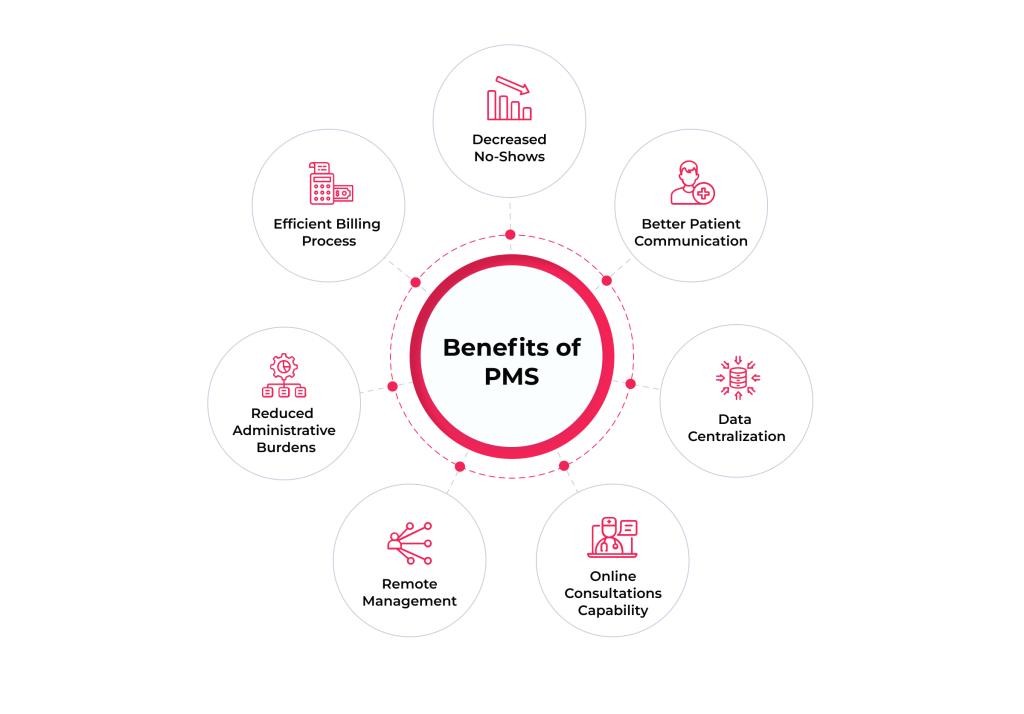
- Reduced Administrative Burdens. PMS helps streamline administrative tasks such as scheduling patient appointments, calculating employee salaries, and saving time.
- Efficient Billing Process. It automates medical billing, generating invoices and tracking claims to facilitate quicker transactions so you get paid faster.
- Decreased No-Shows. Automated reminders help reduce patient no-shows by reminding patients of their appointments.
- Better Patient Communication. PMS tools support the creation of targeted marketing strategies, improving patient communication.
- Data Centralization. All patient management, revenue cycle management, and medical information are centralized in one platform.
- Online Consultations Capability. PMS allows remote consultations via telehealth, enabling patients to connect with healthcare providers from anywhere.
- Remote Management. With cloud-based technology, PMS solutions enable the remote management of healthcare practices from any location globally.
PMS Disadvantages
Despite the benefits, utilizing practice management software may have its drawbacks:
- Learning Curve. PMS systems can be complex and require time, training, and ongoing user education.
- Initial Costs. Although it may be more cost-effective in the long run, the initial adoption of PMS can be expensive due to the need for hardware, training, and support.
EHR and PMS tools offer advantages to healthcare practices by enhancing efficiency, security, and patient engagement. However, they also present challenges, such as high initial costs and learning curves. Carefully analyzing these pros and cons is vital for medical providers to choose the right techs to best support their operational and clinical needs.
Combining the Best of Two Systems
If your organization finds both software tools appealing, you should consider implementing a robust all-in-one practice management and easy-to-use EHR platform. By merging the two models, you obtain a comprehensive practice management and clinical tool.

Key features of an all-in-one EHR and practice management software suite include:
- AI-Powered Decision Tools. AI-driven tools that aid in diagnosis and optimal treatment strategies to streamline your daily operations.
- Dynamic Patient Portal. A portal that empowers your patients to choose appointment times and locations and how they receive test results and medical records, boosting patient engagement. Telehealth capabilities enable you to hold online consultations despite your patients’ locations.
- Streamlined Reporting. Over 40 built-in templates, making it easy to produce detailed reports quickly and monitor your clinic’s practice performance through a user-friendly interface.
- Enhanced RCM. Efficient billing tools and coding automation that accelerate the prescription and billing process, saving valuable time.
- Efficient Prescribing. An e-prescribing tool that accelerates the prescription process, allowing patients to electronically send prescriptions directly to pharmacies.
- Medical CRM Integration. A CRM system that tracks customer experience, gathers feedback, and helps drive practice growth.
- Seamless Synchronization. Real-time updates where every change made during the patient’s journey is immediately reflected across both clinical and administrative views without requiring cross-system verification.
Many software company offerings deliver an all-in-one EHR and practice management system, providing real-time data synchronization. This allows medical practices to optimize operations without compromising performance.
Final Thoughts
Medical practice management software and EHR software for small practices or enterprise networks aim to enhance healthcare settings’ functionality, though they focus on different aspects of operations. PMS solutions address business or administrative elements, such as patient billing and scheduling. In contrast, the core of a practice EHR is centered on clinical documentation and storage of patient records.
Ultimately, depending on the size of your practice, your practice needs, and your long-term goals, you can implement both for a more robust solution like an integrated EHR and practice management platforms suite. Although the relevant approaches differ, both strive to increase practice efficiency and hospital productivity.
Are you considering building a custom EHR and practice management platform? Message SPsoft’s team to receive a technical consultation and discover how we can design a scalable, all-in-one solution tailored to your medical practice!
FAQ
Who manages EHR platforms within a healthcare facility?
EHR platforms are typically managed by healthcare providers, including doctors, nurses, and clinical specialists during patient visits. Meanwhile, internal IT professionals or an external software engineering team handle tech maintenance, system updates, and data migration to ensure system security, high uptime, and HIPAA compliance.
What is the difference between an EHR and a practice management system?
An EHR platform focuses primarily on clinical documentation, managing patient information, tracking medical histories, and supporting clinical workflows. Instead, a practice management system (PMS) handles administrative and business operations, such as appointment scheduling, medical billing, patient registration, and revenue cycle management (RCM).
What is the difference between an EHR and an EMR system?
An EHR system is designed to be interoperable and shared securely across multiple healthcare organizations, providing a holistic view of a patient’s health journey across care providers. An EMR system (electronic medical record) is primarily a digital charting system used within a single practice or clinic and is generally not designed for easy external data sharing.
Is there a specific EHR that is best for my medical specialty?
Yes. The best EHR software is often tailored to your specific field. For instance, large hospital networks frequently rely on enterprise systems like Oracle Health or eClinicalWorks, whereas behavioral health professionals often prefer niche platforms like SimplePractice. Many leading EHR vendors, including Athenahealth and NextGen Healthcare, offer specialty-specific templates for ambulatory care, pediatrics, or cardiology.
What are the advantages of a cloud-based EHR system?
A cloud-based EHR offers remote accessibility, lower upfront hardware costs, automated software updates, and robust data security via encrypted cloud hosting. It is highly scalable and supports seamless integration with third-party tools, making it ideal for a small practice or growing medical network.
Do I need separate billing software if I have an integrated EHR?
No. An integrated EHR and practice management system combines clinical charting with automated billing tools. This combined all-in-one platform translates clinical documentation directly into accurate billing codes without manual data re-entry, helping your clinic get paid faster and reducing administrative errors.
How does PMS improve the patient check-in and check-out process?
PMS streamlines front-office operations through automated patient pre-registration, real-time insurance eligibility verification, and digital co-pay collection. This speeds up the check-in line and ensures that accurate billing details are captured before the patient leaves the clinic.
What is the biggest financial benefit of implementing PMS?
The primary financial benefit is the optimization of revenue cycle management (RCM). PMS automates claim scrubbing, submission, and denial tracking, which minimizes human data entry errors, accelerates reimbursement, and maximizes collections for the practice.
What are the typical features of a PMS patient portal?
A PMS patient portal provides a secure online platform for self-scheduling, digital form submission, pre-registration, two-way communication with clinical staff, and online bill payment, significantly improving patient engagement.
How does PMS help reduce patient no-shows?
PMS utilizes automated reminders via text, email, or phone calls that sync with the clinic’s schedule. By sending timely notifications, PMS decreases missed appointments, keeping the calendar full and protecting practice revenue.