Predictive analytics in healthcare has a vast range of applications, from managing electronic health record (EHR) systems to healthcare data automation and real-time monitoring of intensive care units. Although this tech trend is still evolving, it is already transforming the healthcare industry. Because of the impressive benefits of predictive analytics, the relevant market is projected to reach $121B by 2030.

Affected by the pandemic, the health system is hungry for advanced analytics to predict and prevent the worsening of life-threatening conditions. This demand has put healthcare predictive analytics using data streaming on the rise, allowing healthcare providers to move from reactive to proactive medicine.
Ready to leverage the power of predictive data? Contact SPsoft today to learn how our AI experts can help you build custom predictive models that optimize your clinical workflows and save lives!
Table of Contents
The Basics of Predictive Analytics in Healthcare
Predictive analytics in health is also known as predictive modeling. The technology aims at providing actionable insights by analyzing historical and real-time data. For example, such data covers information on patients and medical facilities that you can derive from an EHR.
By finding common patterns, data-driven applications can predict and alert about potential events and anomalies, like changes in a patient’s condition or a facility’s performance. This significance of predictive modeling transforms into opportunities to improve patient care and facilitate better decision-making for healthcare professionals.
How Does Predictive Analytics in Healthcare Work?
Predictive modeling in healthcare works through five critical steps:

- Data collection. Extracting historical data from storage or gathering real-time data via streaming.
- Data clean-up. Filtering and combining vast amounts of patient data to ensure data quality.
- Predictive model development. Building a predictive model using specific algorithms.
- Analytics system integration. Deploying the predictive analytics tool into the existing health system.
- Data validation. Ensuring the predictive algorithms provide accurate results.
Behind predictive analytics is a combination of AI, machine learning, data mining, and statistics. Data mining serves as the starting point, where analytics in healthcare can identify hidden correlations within historical healthcare data.
What Is Data Streaming in Healthcare?
Data streaming is the implementation of streaming analytics, a type of advanced analytics. In particular, it implies a continuous process of big data transmission. This endless flow is called a data stream and consists of data elements that are frequently updated and ordered in time.

The goal of data streaming is to provide relevant and recent information. Unlike traditional data analysis, streams are:
- Time-sensitive. They lose significance over time.
- Real-time. They report events as they occur.
- Multi-sourced. They collect data from several sources simultaneously.
- Imperfect. They may contain damaged, unordered, or missing data.
Organizations can use predictive analytics and data streaming in various ways, from ride-sharing apps to clinical decision support systems.
Healthcare AI Modeling & Predictive Analytics Advantages
AI and predictive analytics provide many opportunities for a healthcare organization. Here are the primary predictive analytics advantages:
Making Use of IoT Devices
Internet of Things (IoT) is a relatively new technology that extends our capabilities, including those in the healthcare sector. Smart wearables, sensors, and other devices are essential data sources. But we cannot use the information they generate and collect without a suitable data analytics technology. Because IoT devices generate immense loads of data in real-time, streaming analytics is essential to process and analyze data with minimum losses.
No Need to Store Unnecessary Data
Companies must consider data storage or warehouses when working with traditional historical data. This way, you must keep the information until you later access it for analysis. But that leads storage to contain unfiltered data, so some space is taken in vain with insignificant data.

With predictive data analytics and streaming, information is analyzed immediately and can be defined as unnecessary before entering data storage. That allows for maximizing your data warehouse or cloud storage capacity and the quality of stored information.
Combining Several Sources of Data
Predictive analytics enables the integration of data from several devices simultaneously, which provides a broader image of the patient’s condition. For example, the data can originate from medical images, wearables, and onsite medical devices into a single predictive model.
Instant Personalized Insights
Analytics provides healthcare organizations with data on events that occur in real-time, which allows for ensuring personalized and timely care delivery. Based on the information streamed, clinicians get alerts if any changes occur in their patients’ conditions and can act upon them to take measures.
9 Key Applications of Predictive Analytics in Healthcare
Because of the vast amounts of data being generated and circulating in the industry, predictive healthcare analytics find many helpful applications. Medical facilities can enhance their activities across all teams and departments, from patient care to operations management. Here are some processes that predictive analytics using data streaming can transform.
Monitoring Intensive Care in Real-Time
Today, intensive care units (ICUs) are equipped with multiple devices connected to a single system in healthcare software. Therefore, in the ICU, predictive analytics can identify patient deterioration before it becomes critical.

In other words, patient monitors installed in ICUs generate much real-time data. But while this provides opportunities for more attentive patient care, the issue is that up to 99% of the alerts signal safe changes for the patients and do not require medical intervention. That leads doctors to be in constant tension that is unnecessary, provoking fatigue and making a negative impact on their performance. In turn, predictive analytics helps filter out insignificant alerts, reducing alarm fatigue for healthcare providers.
Streamlining Precision Medicine
Using predictive analytics in healthcare allows for the most use of genetic and medical history data. To achieve appropriate personalization in medicine, vast data is a must. Also, improving healthcare with predictive data analytics and data streaming allows for the most use of those data loads. Based on the information about the patient or entire patient groups, you can identify patterns illustrating the most suitable medicine for specific types of patients.
An AI predictive analytics model can predict a patient’s response to a drug, which is vital in complex cases like cancer to improve patient outcomes. Doctors may be in a situation where they must try different approaches to find what scenario will work best to stop the disease from progressing, but they do not have enough time to do that. Predictive analytics, in turn, helps eliminate the less effective treatment plans for each particular patient and suggests scenarios that promise more chances of success.
Clinical Decision Support Systems
Clinical decision support systems (CDSSs) imply software (sometimes AI-powered) that helps doctors make the best medical decisions regarding patient care. While the last word belongs to the clinician, the system handles much work over a short period.
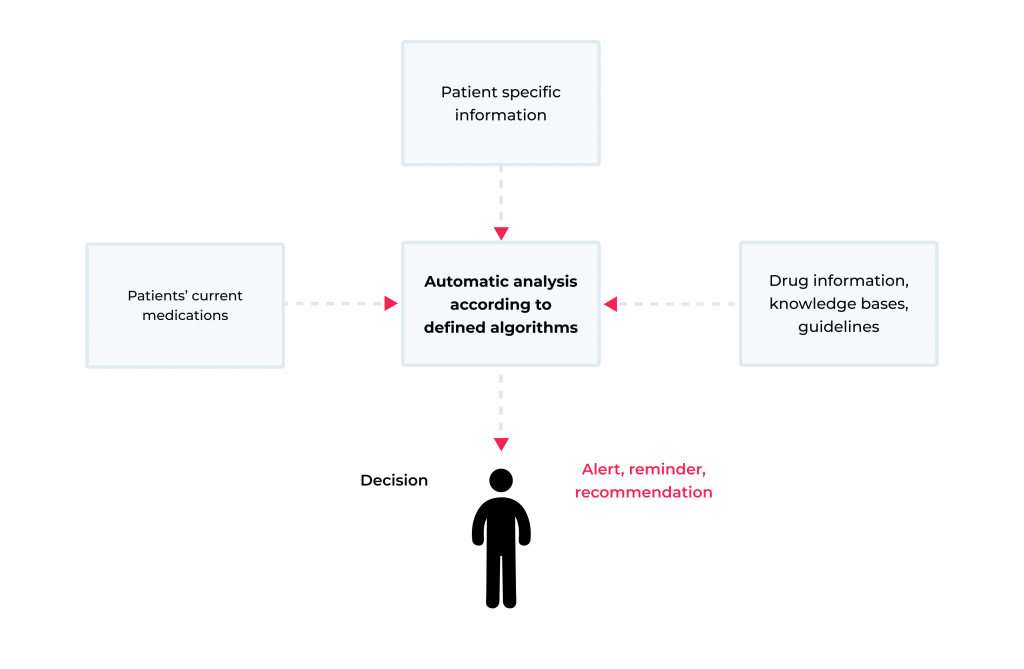
The system processes lots of patient information based on incoming data, which can be both historical and streaming. A predictive analytics tool processes patient data to provide clinicians with actionable insights and actionable suggestions on the subsequent measures to take regarding the patient’s treatment.
While the doctor makes the final call, the use of predictive analytics helps:
- Reduce medical errors
- Ensure successful medication prescriptions
- Enhance patient treatment outcomes
Patient Risk Scoring
For people suffering from chronic conditions, who make up 60% of US adults, it is crucial to monitor the state of their health at various times to spot any risks and potential deteriorations. Similarly, patients recently dismissed from the ward are also at risk. Besides, it is vital for other groups at risk, like the elderly, who faced a significant threat during the COVID-19 emergence.
In this case, predictive data analytics can be beneficial. Based on the information about the person’s lifestyle and real-time health data, the software assesses risks and scores potential scenarios worth paying attention to or addressing to prevent worsening.
For example, diabetes is one of the most widespread health conditions affecting more than 400 million adults globally. And, to a vast extent, the patient has to manage it independently. That is their responsibility to pay regular visits to the doctor and keep track of their blood sugar levels and balance them.
Healthcare predictive analytics can identify patient risks for chronic conditions like diabetes. By using data from glucose meters and wearables, predictive analytics could warn a patient or doctor of an impending threat, helping to reduce healthcare costs associated with emergencies.
Preventive Care and Public Health
By analyzing genetic information and social determinants of health, predictive analytics provides a way to identify predispositions to diseases. Since more than 10% of adults have some genetic irregularities, that may be effective for preventive care.

With the implementation of analytics for historical data regarding genetic conditions and their correlations to diseases, patients can be warned about the potential health issues they can face. At the same time, public health agencies benefit from predictive analytics to track population health trends and intervene at the neonatal or early childhood stages.
Better Resource Allocation
Predictive analytics can also help a healthcare organization manage its complex structure, since allocating resources may become challenging. Medical machine maintenance costs, operation management, inpatient stays, and other critical areas require proper resource distribution. In other cases, the facility may face limited capabilities and financial losses.
Because AI modeling based on ML algorithms allows for identifying patterns, analytics can suggest how much resource each area needs at a particular time. That reduces the chance of allocating too much or little resources to an area of operations or department. Also, that applies to patient overstays. AI and machine learning can predict patient overstays or when a facility will be busiest, helping improve patient care through better staffing.
Similarly, in terms of machine maintenance, predictive analytics uses sensors to track medical device conditions, preventing financial losses. That allows fixing or replacing details to ensure the machine keeps working instead of neglecting repair until it fails.
Lastly, human resource allocation is also one of the predictive analytics advantages. Based on data like the number of patients and medical staff, and other factors, AI modeling can determine when the facility is the busiest and requires the most specialists. Besides, the employees can also take their time off without sacrificing patient care when there are fewer visitors.
Enhanced Supply Chain Management
When it comes to the supply chain in the healthcare industry, it implies a complex network of collective processes and systems. From local manufacturing to global distribution, the chain has to ensure that medical supplies, including devices and medication, are provided to patients on time, even during natural disasters or pandemics, like COVID-19.

Predictive analytics has become crucial for managing medical supplies. Analytics in healthcare include identifying demand patterns and the most cost-effective vendor consolidations to cut expenses on favorable terms for the facility. Also, AI modeling helps find the most challenging areas of the supply chain. That allows tackling issues or even preventing them, minimizing their effect on the entire chain.
Safer Health Insuring
The area of health insurance can also face predictive analytics advantages. Algorithms can calculate accurate insurance costs for patients based on current data streams about the people, from their age to insurance history. That results in a cost-beneficial solution for the patients.
Insurance companies and health insurance providers use predictive analytics to identify fraud. This helps mitigate financial losses due to healthcare fraud, which can reach $300B annually. Based on known cases of fraudulent health insurance claims, you can catch malicious cases as soon as they occur, preventing them.
Similarly, upcoding is one more issue predictive analytics can resolve. That implies higher medical billing than should be considering the healthcare service provided. The technology can improve financial management in healthcare facilities by analyzing the billing data.
Automating & Securing Administrative Tasks
Administrative tasks are the most prone to mistakes in healthcare as they require a lot of human intervention. Since HIPAA defines patient data as sensitive, it depends on high security.
Predictive analytics solutions can automate scheduling and recordkeeping. Because of the fact that healthcare providers must spend less time on paperwork and more on proper patient care, automating various mundane tasks in healthcare facilities helps:
- Reduce the chance of medical error
- Improve data security for sensitive electronic health files
- Optimize data storage
- Speed the completion of each task
- Identify the level of security for specific patient data streams

Then, predictive data analytics can enhance data storage. Staff can be alerted when storages are likely to run out of space before they do and fail to perform. Also, data optimization will be performed automatically and tailored to the needs of a particular facility. Lastly, unnecessary data and duplicates will be removed automatically, prolonging the storage capacity.
Conclusion
Predictive analytics in healthcare using data streaming provides excellent opportunities to reshape a medical facility regarding its operations and capabilities. It helps improve patient outcomes and optimize operations across all departments by moving the industry from a reactive to a proactive model.
As we enter 2026, the integration of agentic AI and interoperable data platforms is turning these insights into autonomous, real-time actions that further reduce administrative burdens. As big data continues to grow, healthcare organizations can use analytics tools to stay competitive and provide the highest quality of care.
Are you considering adopting predictive analytics to transform your business? Contact SPsoft to explore custom-built AI modeling and data analytics tech designed to propel your healthcare organization into the future of medicine!
FAQ
What are the main benefits of predictive analytics in healthcare?
The benefits of predictive analytics are vast, primarily focusing on the ability to improve patient outcomes and operational efficiency. By using predictive analytics in healthcare, providers can identify high-risk patients before they require emergency intervention, effectively moving from reactive to preventive care. Furthermore, it allows for better resource allocation, helping a healthcare organization manage its medical staff and equipment maintenance more effectively. Ultimately, predictive analytics can help reduce healthcare costs by minimizing medical errors and preventing unnecessary hospital readmissions.
How does a predictive analytics model help identify patient risks?
A predictive analytics model works by processing vast amounts of patient data, like historical data from EHRs and real-time data from wearable devices. The AI behind the system identifies patterns that correlate with specific health risks, such as sudden changes in vitals or a history of chronic conditions. By applying predictive analytics, the software can assign a risk score to an individual, alerting medical professionals to potential future outcomes. This use case is essential for managing chronic diseases like diabetes or heart failure, where early intervention is obvious.
What is the role of machine learning in healthcare predictive analytics?
Machine learning is the “brain” behind predictive analytics. It involves training predictive algorithms on large sets of historical healthcare data so the system can “learn” to recognize anomalies without explicit programming. In the healthcare industry, machine learning is used to refine predictive analytics solutions over time, making them more accurate as they are exposed to more patient data. This type of advanced analytics allows health systems to do complex tasks like analyzing medical images for early signs of cancer or predicting population health trends.
How can predictive analytics improve patient care in the ICU?
In the Intensive Care Unit (ICU), predictive analytics provides a way to monitor patients 24/7 with a level of precision human staff cannot match alone. An AI predictive analytics model can analyze real-time data streams from multiple monitors to identify subtle changes that indicate an impending crisis. Moreover, predictive analytics may help solve the issue of “alarm fatigue” by filtering out the 99% of alerts that are clinically insignificant. This allows healthcare providers to focus their energy on the 1% of alerts that require immediate action, improving care delivery.
What are some predictive analytics in healthcare examples for administration?
Predictive analytics in healthcare examples for administration include better resource allocation, staff scheduling, and supply chain management. For instance, predictive analytics can be used to forecast patient admission rates, allowing providers to adjust staffing levels to meet demand. Analytics in healthcare involves tracking the “wear and tear” of a medical device via sensors, predicting when it will need maintenance before it breaks down. Additionally, predictive analytics enables more efficient health insurance claim processing and helps detect losses due to frauds.
How do insurance companies use predictive analytics?
Insurance companies and health insurance providers rely on predictive analytics to identify fraudulent claims and assess patient risk profiles more accurately. By using healthcare predictive analytics, they can analyze historical data to spot “upcoding” or other malicious activities, preventing financial losses. Besides, predictive analytics can identify which patient populations are at higher risk for certain conditions. That allows insurers to offer personalized preventive care programs and ensures that insurance premiums are calculated fairly.
What is the future of healthcare predictive analytics using big data?
The future of healthcare predictive analytics is deeply tied to the growth of big data and IoT integration. As more patients use wearables and mHealth apps, predictive analytics has great potential to provide “hospital-at-home” monitoring. We’ll see a wider use of predictive analytics in genomics to facilitate precision medicine, where a predictive analytics tool suggests the best drug based on a patient’s DNA. As AI and predictive analytics continue to merge, the healthcare organization of the future will be entirely data-driven, leading to improvements in public health.
How can a healthcare organization implement predictive analytics?
Implementing predictive analytics in healthcare starts with a robust data analytics strategy and the right data and analytics tech. First, the healthcare organization must ensure its patient data is clean and stored in an accessible format. Then, they need to partner with experts to build a predictive model tailored to their specific use cases, such as patient risk scoring or resource allocation. Finally, the predictive analytics tool must be integrated into the clinical workflow, ensuring that healthcare professionals can easily act on the actionable insights provided.