
Finding a digital industry transformation that does not touch is hard. Digital healthcare is no exception, mainly because the global digital health market is valued at $211 billion and is projected to experience a CAGR of 18% until 2030. Meanwhile, much of the industry’s focus is on delivering top-notch healthcare services through automation and streamlined workflows. These goals are only possible with a good user interface (UI) and user experience (UX) embedded into healthcare products.

As we look toward 2025, the future of healthcare depends on how effectively we can bridge the gap between complex medical data and human interaction. To get an expert-like perspective, let us focus on ten key healthcare UX trends that help translate digitization into first-class digital experiences. These latest trends are design principles that will shape the future of healthcare.
Ready to optimize your patient experience? Contact SPsoft to discover how our UX design services can transform your healthcare solutions into intuitive, high-performing products that patients and healthcare providers love!
Table of Contents
10 Key Healthcare UX Trends for 2025
Statista indicated that mobile devices were expected to reach $18.2 billion by 2025. Besides, recent reports show that 93% of primary care practitioners already use various digital tools, such as electronic health records (EHRs), in their daily practice. These facts suggest a growing number of potential users on both sides, patients and healthcare providers. To improve patient outcomes, covering the ten key aspects of healthcare UX design is essential.
The Internet of Things (IoT) and Wearable Tech
The Internet of Things (IoT) and wearable tech have found various niches in the healthcare industry. When covering this trend, the starting point should demonstrate the skyrocketing market size, particularly in the United States.

People often associate wearable tech with fitness trackers and contactless payment technology. However, the focus on healthcare is now a rising trend. Following the overall direction of data automation, IoT and wearables have brought new capabilities to health management by measuring and monitoring vitals like blood pressure and heart rate.
With many healthcare organizations entering the wearable tech market, it becomes increasingly important to focus on exceptional healthcare UX. Without a thoughtful healthcare design coming with a wearable device, it becomes challenging for patients to manage their health. To make sure wearable devices provide insights for effective healthcare predictive analytics, a UX designer must focus on:
- Usability & Simplicity. Making data easy to read on small screens.
- Connectivity. Ensuring seamless syncing between devices and healthcare applications.
- Accessibility. Designing for users with limited motor skills or visual impairments.
Focusing on the areas above ensures the digital product is easy to use, connects with other devices, and is accessible to people with disabilities.
Inclusive and Accessible Design
This healthcare UX design trend follows the global movement for embracing inclusivity. In 2025, user-centered design is a legal and ethical requirement. The European Accessibility Act, set to take effect in June 2025, mandates that digital products be accessible to all. In other words, instead of focusing on specific groups of users to design an app or another digital product, the method ensures the software solution is designed to reach as many people as possible.
Thus, inclusive design ensures the largest possible audience can use a healthcare app. This encompasses accounting for diverse user characteristics:
- Age & Culture. Designing for elderly patients who may have lower tech literacy.
- Ability. Accounting for the 1.3 billion people worldwide who experience disability.
- Mental State. Using calming design principles to reduce anxiety for patients in distress. By prioritizing inclusive design, healthcare providers can expand their outreach and provide better patient care.
This way, the inclusive and accessible design offers the best way to grow your target audience.
AI-Powered Healthcare Chatbots
While the world is focusing on generative AI like ChatGPT and Midjourney, specialized chatbots are becoming a staple in digital healthcare. Built with Natural Language Processing (NLP) and user-centric design, these tools help patients book appointments and find answers to inquiries without waiting for a human agent.

In 2025, top healthcare chatbots are moving beyond simple menus to interactive, empathetic agents. They are primarily used in healthcare to:
- Book doctor appointments
- Remind patients to take prescribed medications
- Check on patient health conditions
- Collect feedback to improve service provision
At the same time, proper healthcare UX design ensures these bots are:
- Interactive. Providing machine-patient interaction that feels human-like.
- Safe. Prioritizing data safety and privacy during every conversation.
- Triage-Ready. Helping prioritize urgent cases through smart symptom checking.
To understand what a robust AI-powered healthcare chatbot with a great UX is all about, look at OneRemission, Youper, Babylon Health, and Florence.
Skeuomorphic and Glassmorphism Approach
Skeuomorphism involves designing an interface to resemble actual objects users are familiar with, such as a physical thermometer or a paper medical chart. In 2025, we see a return to these design trends (often blended with “Glassmorphism”) to make digital health tools feel more tangible and less intimidating.
This healthcare design approach is excellent for digital tools because it reduces the learning curve. If a healthcare app looks like a familiar tool, patients need less time to get acquainted with the product. As a result, healthcare services can be delivered faster, and healthcare professionals don’t need to spend as much time on tech support and reading extra materials.
Immersive AR/VR in Clinical Practice
The global AR/VR market in the healthcare sector is booming and expected to accelerate in the coming years. With innovative applications of AI becoming widespread, many techs like AR/VR received new computational capabilities. They reshape how healthcare organizations conduct business and provide services. So, AR and VR are foundational to modern medical technology.

In 2025, AR/VR is used for:
- Visualization. Providing detailed 3D body scans for surgeons.
- Education. Teaching complex procedures to medical students due to innovative design.
- Patient Engagement. Explaining treatments to patients and healthcare professionals through immersive walkthroughs. A UX designer in this space must ensure the greatest degree of control and responsiveness to prevent “sim sickness” and ensure effective UX.
As a result, this healthcare UX trend redefines how professionals leverage virtual reality to improve patient outcomes and prepare new generations of medical students.
Seamless Telehealth and Telemedicine
If you know how to build a robust telemedicine app, you will ensure patients in even remote areas have access to medical professionals. Therefore, telehealth has rapidly become one of the most notable advances in modern healthcare.
The trend uses the power of video conferencing to transform patient-practitioner interactions. Instead of physically seeing a doctor for every minor issue, patients can have a video call or chat. Thus, doctors can treat patients for various conditions remotely. It saves time, money, and lives because time is essential when delivering medical treatment.

Currently, there are HIPAA-compliant healthcare apps and patient remote monitoring tools redefining medical consultations. However, the success of these digital healthcare solutions depends on an intuitive user experience
When telemedicine is coupled with wearable tech, healthcare UX design must ensure:
- Synchronization. Patient information from wearables must flow seamlessly into the video call interface.
- Simplicity. High-speed video consultations must be accessible via a single click.
- Interoperability. Integration with health records must be instantaneous and secure.
Lastly, patients of different age and ability groups should be able to seamlessly use telehealth software and wearable devices to provide healthcare professionals with the data they need. So, when telehealth and IoT healthcare UX trends are brought together, it can be a game-changer for appropriate healthcare provision.
Voice Interface Solutions (VUI)
As healthcare chatbots are getting traction at an incredible pace, voice interfaces are granting a faster influx of patient health data. The global speech recognition market is accelerating, and in 2025, hands-free interaction is becoming a standard feature in healthcare applications.

It means more companies will adopt this technology, and more innovations in this realm will be presented, such as implementing RPA. With the growing push toward automation in healthcare management, people designing voice interfaces are tasked with making them more accessible. In other words, this healthcare UX trend urges to make the technology hands-free and usable to help people with disabilities access different functions without external help. In such a case, a great UX design for a voice interface is the one making sure users:
- Do not need to touch the screen, something that proved extremely important during the COVID-19 pandemic.
- Can use the tool even if a person is blind or paralyzed.
- Conduct medical work when a healthcare professional’s hands are occupied or need to be sterile during surgery.
The most significant challenge with all the aspects of voice interfaces is HIPAA compliance. So, experts are often skeptical that sufficient data privacy measures can be introduced to adopt this healthcare tech broadly. Yet, creating a HIPAA-compliant voice interface might be relatively easy with the experienced and reliable vendor.
Hyper-Personalized mHealth Applications
Personalized healthcare is the goal of the modern healthcare system. For decades, medical professionals have looked for tools for tailored-to-individual-patients treatments. Thus, mHealth technology is closer to widespread personalized medicine. With global mHealth solutions being through the roof, there is a growing demand for this healthcare technology.

Customizable mHealth apps allow for tailored drug prescriptions, personalized notifications, and habit-tracking tools that help patients to manage their health. With the growth of cloud-based solutions, more medical professionals also get access to mobile healthcare apps.
Overall, customizable mHealth apps boost patient engagement. They allow changes in drug prescriptions, doctor appointments, and notification personalization to ensure a patient will not miss an important date or forget to take a prescribed medication. So naturally, for patients to be able to use mHealth apps, these should come with a flawless UX.
Along with a flawless UX, such products must be HIPAA compliant. The trends of 2025 rely on making these digital healthcare UX solutions feel like a personal health coach, adapting the UI based on the patient’s specific condition and daily progress.
Data Privacy and Cybersecurity
Keeping data secure is a primary concern in the healthcare industry. So, cybersecurity services are as relevant as ever before. Let’s see that with the growing healthcare cybersecurity market:

In many cases, breaches occur because users don’t know how to navigate a security feature. As a result, it leads to sensitive information being shared or stored in the wrong place. Thus, UX trends shaping 2025 focus on making security “invisible yet robust.”
Healthcare UX designers are now implementing:
- Biometric Authentication. Face ID and fingerprints that feel natural within the app experience.
- Trust Signals. Clear indicators that an electronic health record is encrypted.
- Frictionless Compliance. Ensuring a user will not unintentionally cause a data breach through confusing menus.
For example, IoT devices, mHealth apps, and telehealth video conferencing solutions must have cybersecurity measures for user experience. Being HIPAA compliant and ensuring a user won’t unintentionally cause a data breach are two things each medical provider should consider when adopting a new healthcare technology.
FinTech Integrations and Simplified Billing
The final healthcare UX trend is unexpected: the integration of FinTech. It’s an ongoing trend regardless of how one might look at it. With healthcare services spending expected to reach $6 trillion, medical institutions are turning to tech to enhance payment processing.
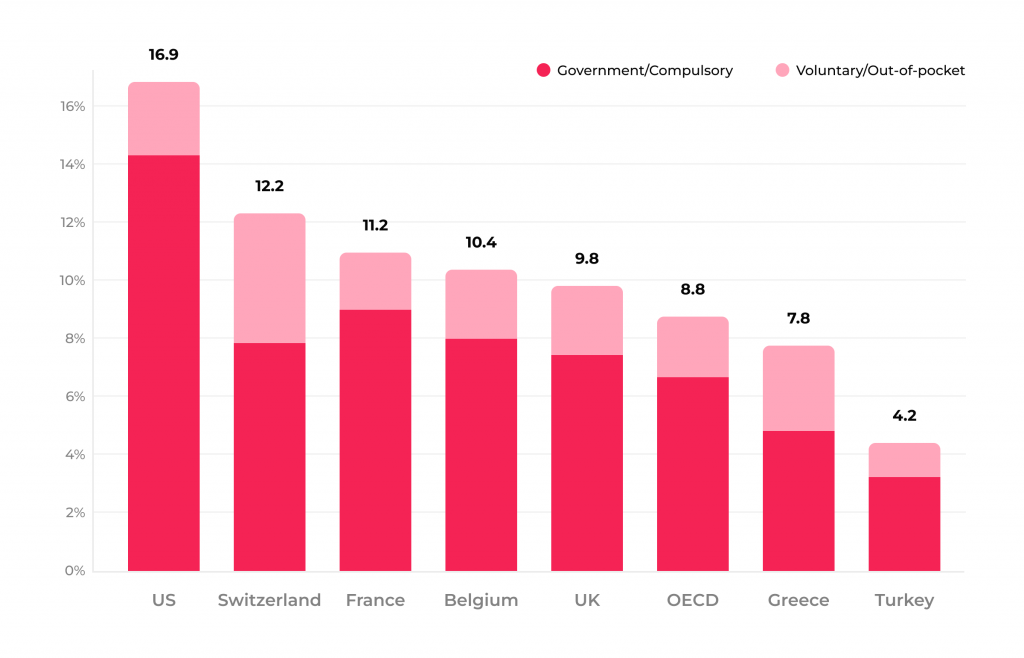
Bureaucratic billing is a major pain point in the healthcare system. Trends show that embedding FinTech with intuitive UX and appealing UI allows patients to manage their insurance and digital payments effortlessly. That allows for streamlining finance-related operations within healthcare, saving money and improving patient experience. Ultimately, smooth financial digital experiences lead to higher patient satisfaction and reduced administrative bloat for healthcare providers.
The Bottom Line
Healthcare UX trends above make sure users can easily handle the newly adopted tech. But innovation is only possible if a target audience can use it properly. That is why UX designers work hard to bring IoT, telehealth, and voice interface solutions closer to users on both sides. Even more, new healthcare tech trends emerging in the future will rely on proper UX as well.
Are you struggling from digital healthcare tools falling behind? At SPsoft, we combine deep technical expertise with innovative design principles to help you stay ahead of the trends in 2025 and beyond!
FAQ
What are the most important healthcare UX trends in 2025?
The top trends for 2025 include AI-powered personalization, inclusive design, and the integration of voice user interfaces. We are seeing a major shift toward user-centered design that caters to diverse age groups and tech literacy levels. Additionally, the future of healthcare UX is heavily influenced by IoT connectivity, where data from wearables is visualized in real-time within healthcare applications. These design trends are trends that are poised to make the healthcare system more accessible and efficient for both patients and healthcare providers.
Why is UX design crucial for digital healthcare products?
UX design is crucial because, in healthcare, the stakes are literal life and death. A confusing user interface can lead to medical errors, such as a doctor misreading an electronic health record or a patient missing a critical medication alert. Effective healthcare UX reduces the cognitive load on healthcare professionals, allowing them to focus on patient care rather than fighting with software. By creating digital experiences that are intuitive and reliable, healthcare organizations can improve patient health outcomes and build long-term trust.
How does inclusive design improve the healthcare experience?
Inclusive design ensures that healthcare solutions are usable by everyone, regardless of their physical or cognitive abilities. This includes patients with visual impairments, motor disabilities, or those who speak different languages. By embedding accessibility into the design in healthcare, healthcare providers ensure that all citizens have equal healthcare access. This user-centric design approach not only fulfills legal requirements like the European Accessibility Act but also fosters an exceptional healthcare environment where no patient is left behind.
What are common UX challenges in the healthcare industry?
Common UX challenges include balancing data privacy and security with ease of use, managing complex healthcare workflows, and integrating with existing healthcare legacy systems. Healthcare UX designers must also address “alarm fatigue” in healthcare services, where too many notifications can lead to clinicians ignoring critical alerts. Overcoming these hurdles requires deep UX research and a thorough understanding of the healthcare sector’s regulatory landscape, particularly HIPAA and GDPR compliance.
How do voice interfaces help patients to manage their health?
Voice User Interfaces (VUIs) help patients to manage their health by providing a hands-free, accessible way to interact with digital health tools. This is especially beneficial for elderly patients or those with visual impairments who may struggle with small touchscreens. Patients can use voice commands to set medication reminders, book appointments, or log symptoms in their electronic health portal. VUIs are a key part of modern healthcare because they lower the barrier to entry for digital healthcare solutions.
What role does a UX designer play in the future of healthcare?
A UX designer acts as a bridge between technology in healthcare and the human beings who use it. Their role is to conduct UX research to understand pain points of medical professionals and patients. They then use design principles to create digital interfaces that are simple, safe, and effective. As we move toward the future of healthcare UX design, these specialists will be responsible for ensuring that AI, AR/VR, and FinTech integrations are woven into a seamless and empathetic healthcare experience.
How does the design process differ for healthcare UX projects?
The design process for healthcare UX projects is more rigorous than for standard consumer apps. It involves intensive “shadowing” of healthcare providers, strict adherence to medical compliance standards, and extensive user testing with diverse patient groups. Designers must account for digital and physical touchpoints, ensuring that the patient’s transition from a healthcare website to an in-person clinic visit is frictionless. Effective UX in this field requires a “Safety-First” mindset where every button and label is evaluated for its impact on patient health.
How can digital tools improve population health management?
Digital tools improve population health by aggregating and visualizing patient information on a large scale. Through effective healthcare dashboards, healthcare providers can spot health management trends, such as an increase in specific chronic conditions in a certain area. Digital health tools that feature good UX allow for faster data analysis, helping healthcare organizations intervene early and deploy medical services where they are needed most. Such a data-driven approach is a core part of digital healthcare’s ability to improve patient outcomes.