Clinical decision support software (CDSS) represents one of the most transformative categories of health information technology available to modern medical practices. These decision support tools in healthcare provide real-time assistance, allowing for more accurate clinical decisions and enhanced patient care. As we move deeper into the technology era, the evolution of CDS is being driven by mass adoption of digital health policies and the integration of advanced artificial intelligence that moves beyond simple rule-based logic to dynamic, learning systems.
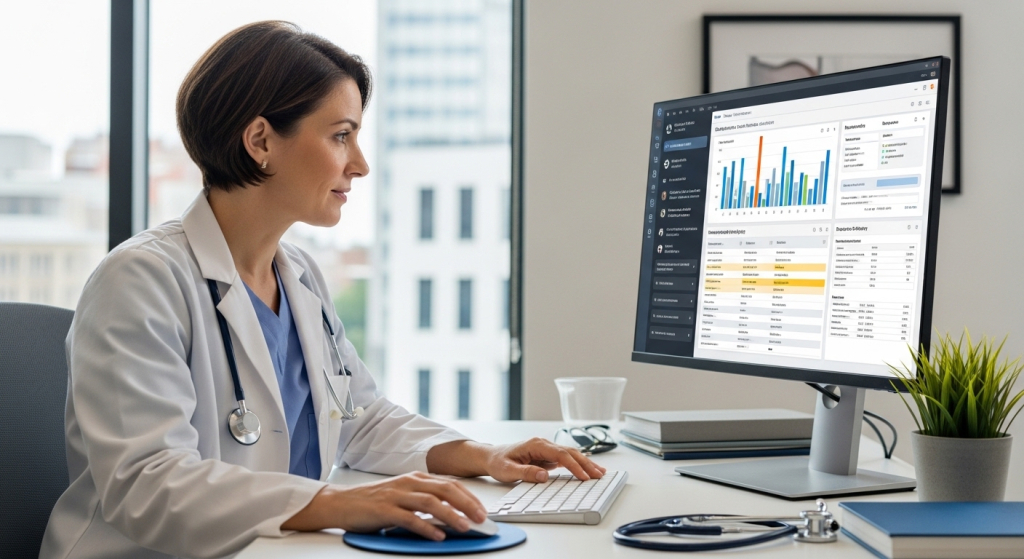
Despite their growing popularity and proven benefits, the significant challenges to CDSS implementation remain. Successfully navigating this landscape requires an understanding of the software function, the latest FDA guidance on non-device CDS, and the strategic selection of a CDS software vendor. This detailed guide explores the advantages and applications of CDSS, regulatory criteria for medical devices, and best practices for building a future-proof clinical decision support system.
Are you ready to optimize your clinical workflows with AI? Contact SPsoft to learn how our digital health experts can help you build a secure, compliant CDSS that empowers clinicians and improves patient lives!
Table of Contents
What Is Clinical Decision Support Software?
First emerging in the 1970s, clinical decision support software was designed to help healthcare professionals make informed decisions about patient care. By providing access to current, relevant, and evidence-based medical information, physicians gain deeper insights into their patients’ health backgrounds and specific cases.

Modern CDSS architecture is built on advanced AI and ML algorithms that allow for processing and analyzing stored and real-time data. This assists a clinician in determining the most suitable decisions for a patient-specific context. Furthermore, CDS facilitates the automation of various processes, enhancing overall workflow efficiency in a healthcare organization.
The Evolution of CDS and the 21st Century Cures Act
A pivotal moment in the history of this tech was the 21st Century Cures Act. This legislation amended the Federal Food, Drug, and Cosmetic Act to clarify which software functions are excluded from the definition of a medical device. Under FDA’s CDS policies, a CDS software function is often considered a non-device if it meets specific non-device CDS criteria:
- It’s not intended to acquire, process, or analyze a medical image or a signal from an IVD.
- It’s intended to display, analyze, or print clinical information or patient data.
- It’s intended to support or provide recommendations to an HCP about diagnosis and treatment decisions.
- It allows the clinician to independently review the basis for the recommendation.
The Food and Drug Administration issued a final guidance in 2026 that further clarified these boundaries, particularly for AI-driven tools that provide a singular output. This guidance document helps developers ensure their non-device CDS functions remain outside the strict definition of a medical device, promoting faster innovation in clinical practice.
The Market Share of Clinical Decision Support Software
Despite the regulatory challenges, clinical decision support is a rapidly growing sector. The market for these digital health solutions has experienced a significant surge. Value in the global CDSS market, which stood at approximately $5.5B in 2021, has reached a point where it is now a cornerstone of healthcare systems worldwide.

Current projections suggest that the market for AI-powered CDS will grow by 30% annually through 2030. This growth is fueled by the adoption of electronic health records and the increasing demand for personalized medicine. Healthcare providers are increasingly investing in CDS software to manage the complexity of clinical data and to ensure that diagnosis and treatment decisions are grounded in the latest research.
The Major Benefits of Clinical Decision Support System
A thoughtfully implemented clinical decision support system has the potential to improve patient outcomes and clinical safety across several domains.
Enhanced Decision-Making Process
CDSS architecture assists providers in the clinical decision-making process by giving access to evidence-based data. This means clinicians receive more scenarios for clinical diagnosis and treatment, including rare cases, within a shorter time frame. Patients with complex conditions have a much higher chance of success when their clinician is supported by a robust CDS tool.
Improved Patient Outcomes
One of the key goals of CDS is to improve patient safety and overall patient outcomes. Since clinicians get deeper insights into patient-specific cases, they make more accurate diagnoses and determine the best treatment decisions. CDS also helps manage treatment progress through computerized alerts and reminders, increasing the chances of long-term success.
Increased Efficiency in the Healthcare System
CDS can improve efficiency by giving healthcare providers the latest clinical information at the point of care. These solutions reduce the time spent on manual research, freeing clinicians to focus on direct patient care. The Agency for Healthcare Research and Quality has noted that CDS acts as a vital information sharing bridge in fragmented environments.
Reduced Medical Errors

A major benefit of clinical decision support is the reduction of errors such as misdiagnosis or incorrect order sets. With 1 in 5 patients in the US experiencing a medical error annually, 50% of which are caused by wrong prescriptions, the role of CDS is crucial. By flagging potential drug interactions or allergies, CDS software acts as a critical safety layer, reducing lawsuits and reputational losses for the healthcare organization.
Better Use of Resources
CDS can be used to allocate resources more effectively. For example, studies from the Office of the National Coordinator for Health Information Technology show that after CDSS adoption, physicians run up to 31.5% fewer unnecessary tests. This translates into significant savings and allows funds to be redirected to more valuable areas of digital health.
Use Cases of Clinical Decision Support Systems
Clinical decision support software has many diverse applications in the field. Here are the ones:
Diagnostic Support
CDS provides access to comprehensive clinical data to assist in diagnosing patients. The medical data includes patient symptoms, medical history, relevant test results and research findings on similar cases. When powered by AI, diagnostic support tools can analyze symptoms and medical history against millions of similar cases to suggest an accurate clinical diagnosis.
For example, the Mayo Clinic is a leading medical center that uses CDSS to improve patient outcomes and enhance the quality of care. Mayo Clinic’s CDSS architecture is designed to improve and speed up intensive care unit (ICU) tasks, including admission and rounding. That helps medical staff to make fewer errors as they move through the high-pressure workflows.
Treatment Planning and Drug Management
CDS assists healthcare providers in determining the best treatment decisions. This includes checking for drug interactions, dosage recommendations, and potential contraindications. The tool also helps physicians determine the most appropriate medications for patients based on their medical history and current medications.
For instance, Oracle Cerner offers health information technology solutions, including EHRs and CDSS. Tools like those from Oracle Cerner help with clinical information management, ensuring that every prescription is safe for the patient’s specific history.
Patient Monitoring and Management
Another CDS application is to monitor patients and manage their care, especially for those with chronic diseases. This involves tracking vital signs and providing reminders for follow-up appointments. CDSSs can also send alerts for health-threatening events or patient condition changes requiring immediate attention.

Leading companies like Medtronic offer CDS solutions that ensure real-time analytics for conditions like heart failure and diabetes. Medtronic’s software provides real-time patient data and analytics to healthcare vendors, guaranteeing that patients receive proper and timely care.
Clinical Documentation and EHR Integration
CDS is often integrated into electronic health records systems to improve documentation. This allows healthcare providers to access clinical information in real time during a visit. CDSSs can also bring tools like progress notes, treatment plans and diagnostic results.
For example, Epic Systems’ CDS application provides evidence-based recommendations directly at the point of care, improving the speed and accuracy of documentation. That helps deliver more efficient medical services to patients.
Clinical Practice Guideline Implementation
Finally, CDS is used to implement clinical guidelines in a healthcare setting. This gives clinicians access to the latest medical practice guidelines and offers tools for tracking adherence to them. Ensuring that all clinical decisions align with best practices available improves the quality of care and reduces the likelihood of unnecessary prescriptions, tests, and medical errors.
Choosing Clinical Decision Support System Vendors
When selecting a clinical decision support vendor, it is vital to analyze several factors to ensure the tool meets the definition of your goals. Here are five factors to consider before making the final decision on your CDSS partner.
Organization’s Needs and Goals
The first step in choosing a CDSS vendor is identifying your business requirements. That covers determining the type of clinical information you must access, the kind of decision-making tools you need and the level of integration with your current EHR or clinical decision support software. Of course, this factor also involves evaluating your existing infrastructure to see what your facility’s system is capable of and what is missing.
Reputation and Experience
It is essential to choose a vendor with a good reputation and experience in building a CDS. This means you have to look at the vendor’s track record in the industry, customer feedback on their examples of clinical decision support systems and any certification program updates or awards they have received. Besides, an expert team will be ready to answer your questions during a consultation to get a clear view of your future partnership in creating a CDSS.
System Features and Capabilities
Also, it is crucial to assess the vendor’s capability to deliver the exact system you need. That involves evaluating how the CDSS architecture they offer will support your clinical practice, the ease of the system for the users and the level of customization available as your organization grows or changes.
Cost and Budget
Cost is a significant factor in selecting a CDSS vendor. It is important to set your budget for CDS software development and implementation and compare the costs of different providers to start the project with the best quality-to-value ratio for your organization. While it may seem a drastic expense initially, remember that CDSS benefits are numerous, like cost optimization through administrative task automation and reduced medical errors. Thus, in the long run, integrating a CDSS into your organization’s infrastructure is a cost-efficient solution.
User Feedback and Testimonials
Finally, you should consider user feedback and testimonials from healthcare providers who have utilized the system and can share insight into its ease of use and the effectiveness of the tools’ alert mechanisms. Since a CDSS will change your company’s workflows, it is crucial to ensure that your future decision support software is not confusing and challenging. Otherwise, it would deliver the opposite effect than it is supposed to, posing a risk of making more medical errors and decreasing the quality of care physicians provide.
Challenges of Clinical Decision Support System Implementation
While CDS offers benefits, there are common obstacles that healthcare providers must address.
Interoperability
One of the most tremendous CDS challenges is interoperability with existing healthcare systems, which refers to the ability of different systems to communicate and exchange data. That includes accessing and incorporating loads of patient information from EHRs, laboratory tools, patient-doctor platforms, and other management systems without data loss. Thus, the new CDSS should integrate with the existing infrastructure of a healthcare organization while neither of the systems malfunctions.
The lack of interoperability can limit the effectiveness of CDSS and make it difficult to provide comprehensive and accurate information sharing among healthcare vendors. This challenge highlights the importance of choosing a CDSS vendor that is compatible with existing healthcare systems and has a strong track record of interoperability.
Lack of Standardization
Another challenge is the need for more standardization. Systems may have different user interfaces, leading to confusion and difficulties in using them effectively. That also makes it hard for healthcare professionals to compare and evaluate many options. So, without consistent clinical guidelines, clinicians may receive conflicting data from various CDS tools. This highlights the need for systems that depend on evidence-based research and verified clinical practice.
Lastly, the lack of standardization affects trust in the information provided by CDS, decreasing the likelihood that healthcare facilities will use the system adequately. This translates into the inability of healthcare organizations and patients to make the most use of the CDSS benefits.
Data Quality and Accuracy
Ensuring the accuracy of clinical data is a constant struggle. Incorrect or outdated data in a CDS can lead to dangerous treatment decisions, misdiagnoses, and other drastic scenarios. Besides, the associated challenge is ensuring the information is relevant to the patient’s current condition. For example, a patient with a history of heart disease may not need to be screened for breast cancer, so CDSS must provide only relevant information for them.
Thus, it is crucial to guarantee that the system’s knowledge base is complete, up-to-date, relevant, and reflects the patient’s medical history, lab results, vitals, and current condition. After all, data accuracy and quality also involve properly incorporating patients’ medical imaging studies and other test results into their records.
Resistance to Change and Alert Fatigue
Clinicians may worry about losing autonomy or experience “alert fatigue” if the system provides too many non-critical notifications. This resistance can result in reduced adoption rates and may negatively impact the overall effectiveness of the CDSS implementation.
To address this, organizations must provide robust training and involve staff in the design and development process of the CDS system. Such measures include providing hands-on training sessions, offering support resources like user manuals and tutorials and assigning dedicated support staff to assist with any questions or concerns.
Also, it may be beneficial to involve healthcare providers to ensure that the CDS system meets specific needs and requirements. That helps build confidence regarding the upcoming change and encourage adoption, as providers are more likely to use a system they have helped create.
Ultimately, addressing the mentioned challenges requires careful planning, the collaboration between healthcare providers and technology experts and ongoing training, monitoring and evaluation to ensure that the system provides the desired outcomes.
Final Thoughts
As we look at the landscape of clinical decision support today, it is clear that these systems are a clinical necessity. By bridging the gap between vast clinical information and real-time patient needs, clinical decision support software empowers clinicians to deliver a higher quality of care.
At the same time, the journey toward a successful CDSS implementation is not without hurdles. Navigating the Food and Drug Administration’s evolving non-device CDS criteria, ensuring EHR interoperability, and overcoming the cultural challenges of digital health adoption require a structured, strategic approach. As technologies like generative AI and agentic automation continue to evolve, the clinical decision-making process will become even more precise.
By choosing the right CDS software partner and focusing on evidence-based transparency, healthcare organizations can build a resilient infrastructure that truly improves patient outcomes and sets a new standard for modern medicine.
Are you considering building a smarter clinical environment? Partner with SPsoft to develop a custom clinical decision support system that meets the highest standards of data integrity and clinical accuracy!
FAQ
What is the simple definition of clinical decision support (CDS)?
Clinical decision support (CDS) refers to a type of health information technology designed to provide healthcare professionals and patients with patient-specific information. The latter is intelligently filtered or presented at appropriate times to enhance healthcare. CDS covers a wide variety of tools, including computerized alerts and reminders, clinical guidelines, and order sets. By integrating a knowledge base with specific patient data, these software applications help a clinician make better-informed clinical decisions throughout the patient care journey.
Is all clinical decision support software considered a medical device by the FDA?
No, not all clinical decision support software is a medical device. Under the 21st Century Cures Act, certain CDS software functions are excluded from the definition of a medical device if they meet all four criteria of the non-device CDS criteria. These criteria ensure that the software is only intended to support, not replace, the judgment of a clinician and that the professional can independently review the reasoning behind the system’s recommendations. If a tool analyzes medical imaging or is intended for critical, time-sensitive decisions, it may still meet the definition of a medical device and require Food and Drug Administration oversight.
How does the 2026 FDA guidance change how CDS tools are regulated?
The final guidance issued in 2026 provides more clarity on singular output recommendations and the definition of device. It states that the Food and Drug Administration intends to exercise enforcement discretion for CDS tools providing a single clinically appropriate recommendation, as long as the tool meets other non-device CDS requirements. This is a shift from previous FDA guidance which often required a list of multiple options. The final rule emphasizes transparency, requiring that software function logic be accessible to the HCP so it is not a “black box.”
What are the main benefits of CDS for healthcare organizations?
A clinical decision support system offers many advantages, including reduced medical errors, improved patient outcomes, and increased operational efficiency. By providing real-time alerts for drug interactions or missing vaccinations, CDS helps healthcare providers avoid costly medical malpractice. Also, the adoption of electronic health records combined with CDS can improve the quality of care by ensuring adherence to the latest clinical practice guidelines. This leads to a more consistent and evidence-based approach across the healthcare organization.
Why is “alert fatigue” a concern for clinician-facing software?
“Alert fatigue” occurs when a clinician is overwhelmed by a high volume of frequent, often non-critical, computerized alerts and reminders. This can lead to clinicians ignoring important warnings, which may compromise patient care. To mitigate this, a successful healthcare implementation must prioritize and tier alerts based on urgency and clinical relevance. Digital health policies increasingly focus on the intended use of these tools, encouraging developers to create CDS software that provides only the most relevant, actionable insights.
How does the Office of the National Coordinator (ONC) support CDS?
The Office of the National Coordinator for Health Information Technology (ONC) oversees the certification program updates for health information technology. The National Coordinator for Health Information and the Coordinator for Health Information Technology work together to set standards for interoperability and information sharing. Through the digital health center of excellence, the ONC promotes the use of evidence-based CDS tools to improve patient health. They also provide resources through the Agency for Healthcare Research to help facilities manage the adoption of electronic medical records.
Can CDS be used for diagnosing complex diseases using medical imaging?
If software might analyze medical imaging (like a CT scan or MRI) to provide a clinical diagnosis, it generally does not meet the non-device CDS criteria. Such functions are typically regulated as a medical device because they involve processing complex signals that a clinician cannot independently verify as easily as text-based clinical data. While CDS can improve the speed of a diagnosis, diagnostic support tools that rely on imaging are subject to more stringent Food and Drug Administration regulations under the Federal Food, Drug, and Cosmetic Act.
What is the role of the Assistant Secretary for Technology Policy in CDS?
The Assistant Secretary for Technology Policy and the Coordinator for Health Information Technology help shape the digital health policies that govern CDS tools. They ensure that clinical decision support software aligns with broader national goals for health information technology. By overseeing HCPS standards and certification program updates, they ensure that certain software functions provide the necessary clinical information to improve patient outcomes while maintaining high levels of privacy and security across all healthcare systems.