There is basically nothing in this world that could have been dubbed irresistibly perfect, right? Well, yeah, but for Tarantino movies. Hence, regardless of how good and secure the JavaScript runtime Node.js could be, it still has its own flaws and weaknesses, just like any language or framework. For example, one of Node.js’ most acute pain points (often ignored, by the way) is its third-party packages. Oh Lord, those third-party solutions, eh?

The thing is that the majority of the Node Package Manager (NPM) ecosystem’s elements can be impacted indirectly through dependency chains, and it renders the need for studying the breach causes essential. Otherwise, you won’t be able to prevent violations from happening. A study shows that 14% of the NPM’s elements can be impacted directly, while 54% of it falls within the threat of an indirect impact. This critical area is known as supply chain security.
We know that Node.js security is impossible without threats (code libraries, ready-made solutions, open source elements, etc.). Nonetheless, it all boils down to the readiness to deal with problems and not one’s willingness to omit them. Let’s face it: issues will come whether you want it or not. Today, we will talk about the “Hateful Ten” of the most widespread Node.js security issues, breaking them down into a detailed guide on fixing each of them with proven security best practices.
Don’t wait for a data breach to expose your app security flaws. Contact SPsoft’s security experts today to audit your Node.js application, fix critical security issues, and implement secure coding best practices!
Table of Contents
Defining NPM: An Essential Node.js Development Element
Right before we plunge into learning how to identify and fix the most widespread Node.js security issues, let’s widen our expertise horizons a bit, shall we? First, we’ll talk about NPM and its importance to Node.js in general. NPM is an open source ecosystem that supplies a substantial portion of the functionality required by the apps running on Node.js. The ecosystem also facilitates the software development process as the parts of the source code, akin to packages, can be shared, installed, updated, and uninstalled in a very simplistic manner.

There is a need to understand that the Node.js development codebase may contain up to a million packages, which lets the developer use the already-created functionality instead of manually coding every single bit of software. Yet, there is more to this than meets the eye. Whenever adding an NPM package, you can expect associated risks and security vulnerabilities to come along as a “bonus” to grab. Luckily enough, the Node.js developers have understood this fact in the nick of time and came up with the NPM audit in 2018.
The NPM audit tool alerts developers about possible vulnerabilities when a piece of code with a known weakness or risk is installed. This software creates comprehensive reports, which include the dependency tree of the code, as well as security reports and tips on how to improve your specific problem. However, it turns out that NPM, let alone, does not cope with the mission comprehensively. Additional cybersecurity maneuvers are required to establish reliable application security.
Why Are There Problems with NodeJS Security?
This is a question that sounds quite rhetorical or even dramatic, isn’t it? However, as a developer, you’re faced with a primordial choice: you either code everything from scratch or use open source solutions and save yourself a great chunk of time and effort. Sticking with open-source solutions is definitely worth it, as the benefits of harnessing the open-source code potential outweigh the security risks you’ll have to deal with.
The challenge lies in the massive dependency tree. Every NPM package you install likely has its own dozens of sub-dependencies. A single vulnerability in Node.js’s core, or in a commonly used dependency, can cascade, affecting thousands of Node.js applications. This is why tools like Snyk are essential — they continually monitor your dependency graph on platforms like GitHub for security vulnerabilities that arise after installation.
Node.js Vulnerabilities and Solutions to Them
Node.js is vulnerable to security threats imposed by the open source elements often used when coding in this runtime. In fact, there are different threats associated with the use of Node.js, including man-in-the-middle, code injection, and other advanced security risks. We’ve come up with a selection of ten of the most widespread and vicious ones, bringing the solutions to the table of discussion.

Situation 1. XSS Attacks Resulting from Invalid User Inputs
XSS is also known as Cross-Site Scripting, which presumes the injection of scripts to the website pages, which, in turn, may lead to data breaches. JavaScript code is perfectly applicable for this purpose, meaning that a malefactor may put the JS code into a search field. Since the code does not coincide with the content of the database, it is returned. However, the attacker gains access to a similar code, which may now be executed within the runtime.
Solution 1. Robust User Input Validation and Sanitization
Input validation is essential. Validate the user input with the help of such tools as Jade Engine, XSS-Filter, Validatorjs, and others. More importantly, you must sanitize the output before rendering it to the browser. Use a templating engine (like Handlebars or EJS) that automatically escapes potentially malicious HTML before rendering.
Situation 2. Injection Attacks (SQL, Command Injection)
Node.js is vulnerable to classic injection attacks like SQL injection and Command Injection if Node.js developers concatenate untrusted user input directly into database queries or system shell commands. This allows an attacker to execute unauthorized code on your server or database.
Solution 2. Parameterized Queries and Safe Child Processes
- SQL Injection. Always use parameterized queries (prepared statements) for database interaction. Never build queries by concatenating strings with user input. This ensures that the database treats the user input as data, not executable code.
- Command Injection. Never pass raw user input to Node.js child process functions (exec, execSync). Instead, use functions designed for safe execution, such as spawn with an array of arguments, to prevent a command injection vulnerability.
Situation 3. Back-Front-End Data Leaks
When the front end receives the information from the back end, what are the guarantees that you can offer that sensitive data (login and password by the very least) won’t be revealed or sold to the cyber culprits? The notorious Ashley Madison dating app gave up the data of 37 million users by failing to ensure rigid protection for the data traveling to and from the front end and back end.
Solution 3. Restrain & Check Data Exposure and Use Environment Variables
Would you find it predictable if we recommended you not to let any kind of sensitive data that is not required at the front end go there? Yes, you would. Minimize the fields returned by the API.
- Poison Records. Originally used to prevent the SELECT*-type injections, poison records are there to help you detect massive access requests to the database.
- Environment Variables. Never store secrets (like API keys, database credentials) directly in the source code or version control. Use environment variables and secret management tools to secure these credentials.
Situation 4. Insecure Express Framework Configuration
Whenever it comes to developing a web application with Node.js, the Express framework will be there for you, as it is the de facto standard server framework. Still, publicity always meant security issues. Express.js can be quite sensitive to local file read errors (a form of path traversal).
Solution 4. Secure the Framework & Cookies with Middleware
To begin with, consider installing Helmet.js, a Node.js module that will surely save your day. Helmet.js is a perfect example of middleware that can prevent man-in-the-middle attacks and cross-site scripting. Helmet.js represents 13 middleware functions to use and set your HTTP security headers right and secure.
- HTTP Security. Ensure HTTP security by setting crucial headers (like Strict-Transport-Security and X-Content-Type-Options). Disable the default X-Powered-By header by setting the app.disable(‘x-powered-by’) command.
- Cookie Security. Protect your cookies. When setting your cookies security options, make sure to check the following boxes: Secure (only transmit over HTTPS) and HTTP Only (prevents JavaScript from accessing the cookie).
Situation 5. Scarce Prevention (Lack of Linting/Static Analysis)
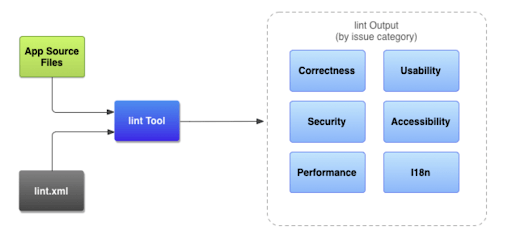
Well, there’s no better treatment than prophylaxis. The issue here is not everyone is eager to deal with secure coding guidelines and security checks. Lints help your code detect the probability of an attack in advance. Lints render all the app’s performance areas stronger.
Solution 5. Use Static Analysis Tools and Linters
Install linting plugins like ESLint with security rules tailored for Node.js secure coding. This automated scanning identifies coding flaws and potential vulnerabilities that could lead to injection vulnerabilities or exposure of sensitive data.
Situation 6. CRSF Attacks (Cross-Site Request Forgery)
CRSF is one of the fiercest enemies of modern cybersecurity, as it manipulates the users, luring them to perform the actions they do not want but yet tend to do so. CSRF presumes the implementation of malware through remote code. Since 2018, almost 3% of all the newly discovered vulnerabilities have been classified as CSRF.
Solution 6. Node.js Anti-Forgery Tokens
Fortunately, there are anti-forgery tokens that can be used to prevent CSRF attacks. Node.js can be configured to check user requests. A token is a unique, secret, and unpredictable value generated by the server and included in every state-changing request (like POST or PUT). The server checks if the request token matches the session token, preventing unauthorized requests.
Situation 7. Scarce Authentication System
It all starts with the lack of a solid authentication system, which would let you verify your users and thus track the perpetrator. Many developers think that “having authentication in place” is enough, but neglecting multi-factor authentication or relying on weak session management leaves the server vulnerable.
Solution 7. Robust Session Management and Third-Party Auth
- Session Management. Use secure session IDs to maintain state, ensuring every client is assigned his or her own unique, time-limited session ID. The server stores the session ID information in a secure database.

Third-Party Auth. You can embark upon using ready-made solutions, such as OAuth, Okta, and Firebase Auth. Make sure that your users go through the two-factor authentication, as this is the most reliable way of getting their sessions secure.
Situation 8. No Automated Scanning for Known Vulnerabilities
The utilization of libraries is especially popular when coding with Node.js, meaning that the vulnerability of your software rises exponentially and correlates to the volume of library code that you use. It seems like you need some scanning done before you get to feel the harm. This is a crucial supply chain security practice.
Solution 8. Automated Dependency Scanning with Snyk and Retire.js
Uncovering vulnerabilities in the open source code prior to it causing harm to your system is a crucial step to take. Here, you are not alone, as there are a plethora of security tools to choose from and apply, such as OWASP Dependency-Check, Retire.js, and Acutinex. The industry leader, Snyk, can be integrated directly with GitHub to automatically scan every pull request for known vulnerabilities.
Situation 9. Weak Credentials and Misconfigured Environment Variables
Software deployment and operations are complicated. Weak pipelines can become the bait that lures hackers to gain access to your system. Javascript development requires you to render each and every server environment equally protected.
Solution 9. Strengthen the Environments and Use Secret Management
- Credential Management. Never hardcode API keys, passwords, or secrets directly into the source code. Use environment variables to pass configuration and secret management services (like AWS Secrets Manager or HashiCorp Vault) to secure access for the Node process.
- Principle of Least Privilege. Configure server access based on the least privilege principle, ensuring that no Node process or module has more access rights than strictly necessary.
Situation 10. Denial of Service (DoS) and Logging
Last but not least, Denial of Service (DoS) attacks, especially those related to resource exhaustion, pose a significant threat to a Node.js application. The most common type is Regular Expression Denial of Service (ReDoS), where a complex regular expression ties up the single-threaded Node process, effectively causing a denial of service.
Solution 10. Implement Rate Limiting, Monitoring, and Safe Regex
- Rate Limiting. Implement rate limiting at the API gateway or server level to mitigate typical DoS attacks.
- Safe Regex. Avoid using complex, vulnerable regular expressions, which can cause a regular expression denial of service. Use tools that check for ReDoS vulnerability.
- Monitoring and Logging. This reactive security measure will help you identify the threat and redo the damage effectively. Continuous monitoring will detect the cases of different issues in real time. Application monitoring relates to CPU and server monitoring, web server access logs analysis, and error rate tracking.
Conclusion: Embrace the Secure Node.js Mindset
Node.js development has its own fair share of vulnerabilities. This is the truth we have to face. The sooner we do it, the sooner we’ll start eradicating them. That is actually what distinguishes a decent, reliable software vendor from a mediocre one. The former knows that there are security issues but knows how to deal with them; the latter tries to flee from them only to bump into a whole new, unscrutinized set of bugs and Node.js security scarcities.
Libraries and open source solutions, which are quite ample in Node.js, entail a chunk of troubles that might hinder the app’s security, which is unforgivable in today’s market. The price to pay for the “saved time and effort” of software development is often too high if secure coding practices are neglected. Constant cybersecurity attacks, greedy hackers, and irresponsible users add to the list of the security risks you’ll have to face when dealing with Node.js development. After all, it is all about the attitude towards the issue, not the problem itself.
If you need a reliable development partner to help implement these security tips and ensure a robust security posture, SPsoft has the knowledge and tools necessary.
Ready to stop dealing with security vulnerabilities alone? Transition your skills from a theoretical understanding of Node.js security to practical mastery. Contact our advanced security and DevOps team today to explore mentorship opportunities and partner on complex projects!
FAQ
What is supply chain security in the context of a Node.js application?
Supply chain security refers to securing the entire process of building a Node.js application, particularly focusing on the integrity of its dependencies. Since a typical Node.js application uses hundreds or thousands of NPM packages, a single malicious package introduced by a hacker into the ecosystem can compromise the entire application. Maintaining this requires continuous scanning using tools like Snyk and Retire.js to detect known vulnerabilities.
What is the Node.js Ecosystem Security Working Group?
The Node.js Ecosystem Security Working Group is a body of security research volunteers and core Node.js developers focused on identifying and mitigating security related issues within the entire Node.js ecosystem. They collaborate on promoting secure coding guidelines and tools to improve the overall security of Node.js projects and address newly discovered vulnerabilities.
How does Helmet.js middleware help achieve better HTTP security headers?
Helmet.js is a collection of 14 Node modules that implement HTTP security headers. By using this middleware, a Node.js application automatically sets headers like Strict-Transport-Security (forcing HTTPS), X-Content-Type-Options, and Content Security Policy (CSP). These headers protect the client (browser) from attacks like XSS and Clickjacking, significantly enhancing the application security posture.
Why are Node.js developers advised against passing user input to the command line?
Node.js developers are advised against passing untrusted user input to the command line via functions like child_process.exec(). Doing so creates a high-risk command injection vulnerability. If an attacker includes a shell separator (like ; or &&) in their input, they can execute arbitrary commands on the underlying server, leading to full system compromise. Secure coding practices dictate using child_process.spawn() with sanitized arguments.
What is the Node Security Project (NSP), and what is its legacy today?
The Node Security Project (NSP) was a community-driven initiative that created one of the earliest public databases for known vulnerabilities in NPM packages. NSP helped popularize the concept of dependency scanning in Node.js. In 2017, NSP was acquired by Snyk, and its comprehensive database and tooling were integrated into Snyk’s platform, which continues to be an industry-standard security tool today.
What steps should a security team take to prevent injection vulnerabilities in APIs?
To prevent injection vulnerabilities in APIs, the security team must enforce two secure coding rules: Input validation (checking data type, length, and format of all user input) and Output Encoding (escaping data before rendering it in the client). For secure APIs interacting with a database, they must mandate the use of parameterized queries to neutralize injection threats like SQL injection.
How does an NPM audit differ from using a commercial tool like Snyk?
NPM audit scans your project’s dependency graph against a public database of known vulnerabilities maintained by NPM and provides remediation suggestions. While useful, it focuses primarily on the NPM registry. Commercial tools like Snyk often provide a deeper level of analysis, including proprietary security research, scanning for license compliance, and offering direct fixes for vulnerabilities in both open source and proprietary code, leading to better overall security.
Why is logging and monitoring considered a crucial, proactive part of Node.js security?
Logging and monitoring are crucial for maintaining a strong security policy because they allow the security team to quickly detect anomalies, such as an excessive number of failed login attempts or unusual resource usage (potential denial of service). Monitoring tools help teams debug issues and provide advanced security telemetry needed to understand how a breach occurred and implement a faster, more effective response.